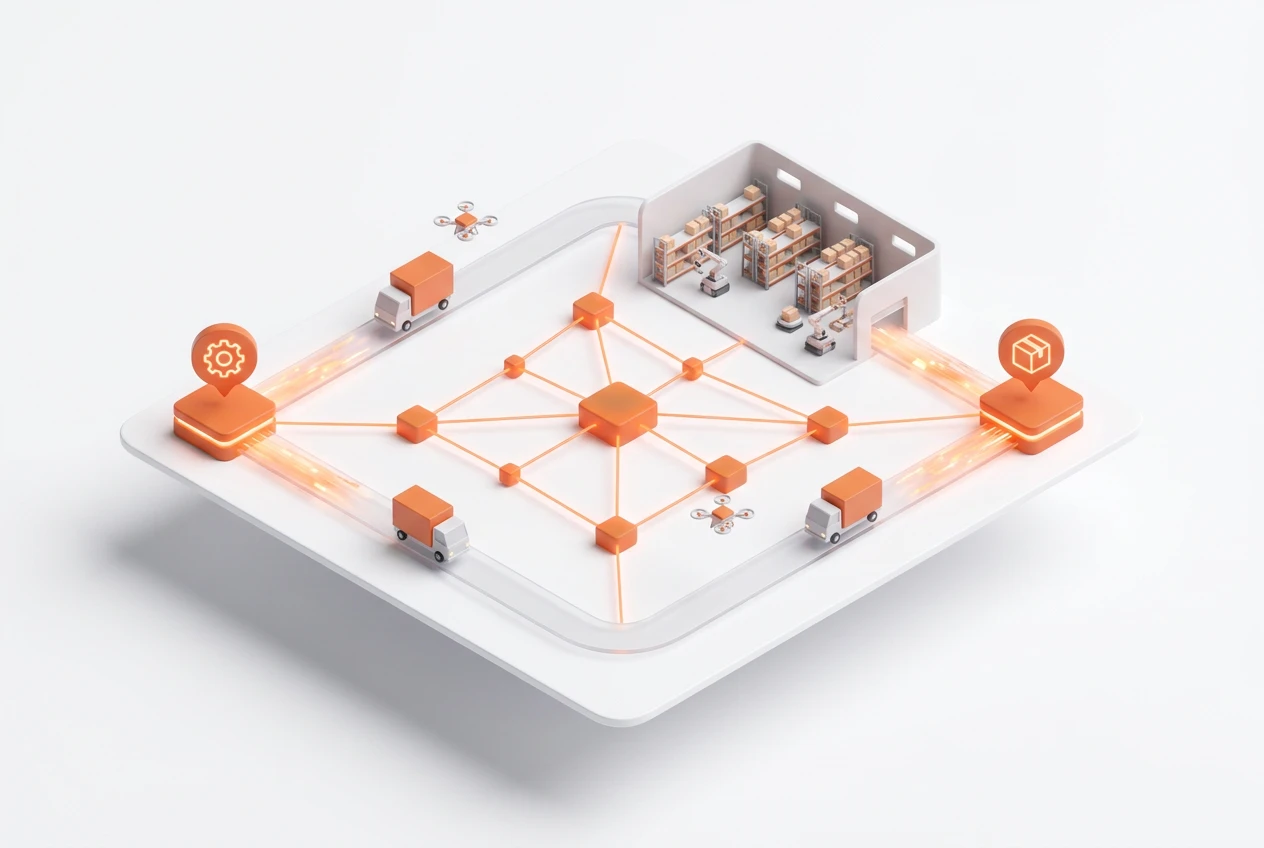
An ERP system integrates all stages of the supply chain—from procurement and manufacturing to warehousing and distribution—into a single platform. This provides comprehensive visibility into operations, reduces manual errors, and improves demand forecasting. In addition, it accelerates strategic decision-making. As a result, this integration leads to lower costs and increased operational efficiency, supporting the sustainable growth of your business and driving it toward success.
What is supply chain automation?
Supply chain automation is the use of technology to streamline repetitive processes within the supply chain. These processes include inventory management, order processing, shipping, and tracking. The main goal is to reduce human intervention in day-to-day tasks. Consequently, this leads to increased accuracy, speed, and efficiency. Automation allows companies to focus on strategic growth rather than getting bogged down in operational details.
Why is an ERP system essential for supply chain management?
An Enterprise Resource Planning (ERP) system is the backbone of any modern supply chain. It consolidates data from various departments—such as sales, procurement, and warehousing—into a single centralized system. This integration provides a unified and real-time view of all operations. Through it, companies can accurately monitor inventory levels and avoid stockouts or overstocking. Furthermore, the system facilitates collaboration among different teams and improves decision-making.
How does an ERP system improve demand forecasting?
Accurate demand forecasting relies on the analysis of historical data and market trends. An ERP system automatically collects and analyzes this data to provide accurate forecasts. For example, it can identify seasonal patterns or the impact of marketing campaigns on sales. As a result, companies can better plan their purchasing and production. This ensures that the right products are available at the right time, which enhances customer satisfaction and reduces inventory costs.
What are the benefits of supply chain automation for e-commerce stores?
For e-commerce stores, efficiency and speed are vital. Supply chain automation through ERP software offers companies tremendous benefits in this sector. First, it automatically processes orders as soon as they are received, reducing delivery time. Second, it provides customers with real-time updates on shipment status, which increases their trust and satisfaction. Additionally, it helps manage returns efficiently, which is an essential part of the e-commerce experience.

How to Choose the Right ERP System for Your Supply Chain?
Choosing the right system is a strategic decision that requires careful consideration. The system must meet your business’s current and future needs. First, identify the challenges you face in your supply chain. Then, look for solutions that offer the specific features you need. It’s also important that the system be user-friendly and capable of integrating with your other software. At BOOM MEDIA, we help companies identify the most suitable digital tools to achieve their operational goals. Here are some basic steps for making your selection:
- Clearly define your business requirements and goals.
- Look for ERP systems that specialize in e-commerce or distribution.
- Make sure the system is scalable as your business grows.
- Request a demo to experience the user interface and features.
- Compare total costs, including licensing fees and technical support.
- Check for integration capabilities with other systems you use.
What is the role of ERP system integration with logistics services?
The integration of ERP systems with logistics partners plays a pivotal role in improving operational processes. When the two systems are linked, shipping information is automatically transferred between your company and the shipping carrier. This means printing shipping labels, scheduling pickups, and tracking shipments with the click of a button. As a result, this integration reduces manual errors and saves valuable time. It also gives you complete visibility into the shipment’s journey from the warehouse to the customer’s doorstep.
Can ERP software for small businesses improve their operations?
Yes, absolutely. ERP software is no longer exclusive to large companies. Today, there are affordable cloud-based ERP solutions designed specifically for small and medium-sized businesses. These systems allow small businesses to reap the same benefits of automation and efficiency. In particular, they help streamline operations from the very beginning, paving the way for organized and sustainable growth. Instead of using multiple spreadsheets, a small business can manage everything from a single platform.
How does supply chain automation help reduce costs?
Supply chain automation helps reduce costs in several ways. First, it reduces labor costs by automating repetitive manual tasks. Second, it improves inventory management, reducing storage costs and the capital tied up in unsold inventory. In addition, it automatically selects the cheapest shipping options for each order. As a result, operating costs are significantly reduced, increasing the company’s profit margin. Follow our Facebook page for more tips on improving your business performance.
Frequently Asked Questions
How does an ERP system help improve supply chain management?
An ERP system integrates all stages of the supply chain into a single platform. This provides comprehensive visibility into operations, reduces manual errors, improves demand forecasting, and speeds up decision-making, leading to lower costs and increased efficiency.
What is the difference between ERP and traditional inventory management software?
Inventory management software focuses solely on tracking inventory levels. In contrast, an ERP system is a comprehensive solution that integrates inventory with sales, accounting, procurement, human resources, and other business functions.
Is implementing an ERP system complicated and time-consuming?
The duration and complexity of implementation depend on the size of the company and its requirements. However, modern cloud-based ERP systems are faster and easier to implement compared to older, traditional systems. Many companies offer fast-track implementation plans.
How much does a supply chain ERP system cost?
The cost varies significantly depending on the size of the system, the required features, and the number of users. Cloud-based solutions for small businesses start at reasonable monthly subscription rates, while custom systems for large enterprises require a larger investment.
Can an ERP system handle international suppliers?
Yes, most modern ERP systems support multi-currency and multi-language transactions. This facilitates managing purchases from international suppliers and tracking cross-border shipments, making them ideal for companies with global supply chains.
Supply chain automation is no longer an option but a necessity for growth in today’s competitive market. By implementing the right ERP system, you can transform your operations and achieve unprecedented efficiency. The BOOM MEDIA team, with over 8 years of experience, is ready to help you select and implement the best digital solutions. Contact us today to explore our services and begin your journey toward operational excellence.