

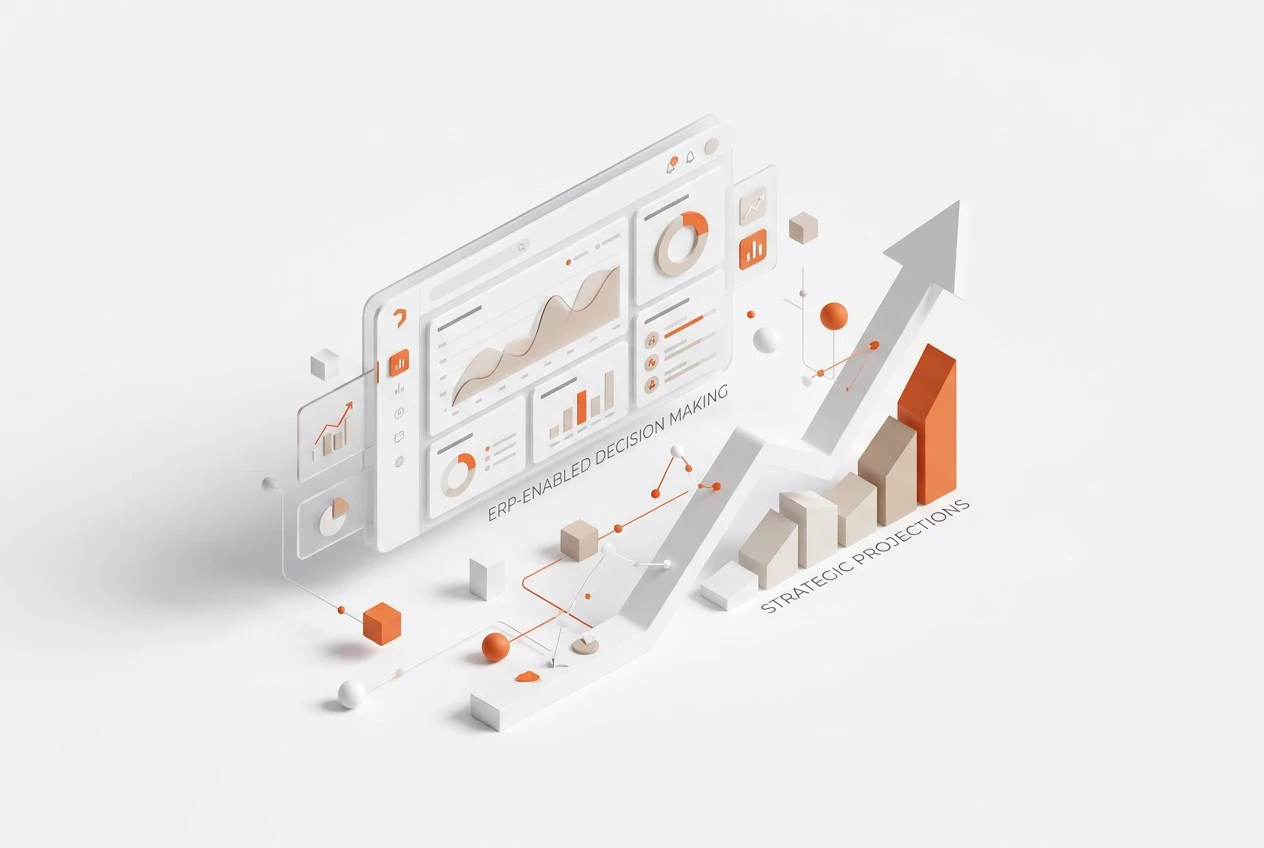
An ERP system unifies core operations such as sales, finance, and inventory into a single platform, giving you a comprehensive view of your data. This enables faster and more accurate decision-making, improves efficiency, and sets your company’s infrastructure up for strategic expansion with ease and without operational hurdles.
What exactly are Enterprise Resource Planning (ERP) systems?
Enterprise Resource Planning (ERP) systems are integrated software solutions that manage and unify a company’s core business operations. For example, these systems combine accounting, human resources, supply chain management, and sales into a single centralized database. Thus, instead of using multiple, separate programs, an ERP system provides a comprehensive solution. This approach ensures that information flows seamlessly between different departments, reducing errors and increasing transparency.
How does an ERP system enhance operational efficiency?
An ERP system automates repetitive and manual tasks, freeing employees to focus on higher-value activities. For example, the system can automate invoicing, track payments, and manage inventory. As a result, human errors are reduced and processes are completed more quickly. In addition, these systems provide real-time visibility into inventory levels and orders, helping to improve planning and avoid stockouts or excess inventory. Collectively, these improvements lead to a significant increase in operational efficiency.
What role does unified data play in companies’ strategic expansion?
Unified data plays a pivotal role in supporting companies’ strategic expansion. When all your financial, sales, and operational data is in one place, you gain a complete and comprehensive view of the company’s performance. As a result, you can analyze trends, identify opportunities, and make informed decisions quickly and confidently. For example, you can easily assess product profitability or the performance of different geographic regions. This clear visibility is essential for developing effective growth strategies and optimizing resource allocation.
Can an ERP system support sustainable business growth?
Yes, absolutely. Sustainable business growth isn’t just about increasing revenue; it’s about building a strong infrastructure that can support that growth. An ERP system provides this infrastructure by standardizing processes and delivering accurate data. Furthermore, as your company expands—whether by hiring new employees or opening new branches—an ERP system can easily adapt. This scalability ensures that your operations won’t become a bottleneck that hinders your growth, but will remain efficient and organized.
How does an ERP system help me expand into new markets?
When considering expansion into new markets, companies face challenges such as managing different currencies, complying with local regulations, and managing complex supply chains. Modern ERP systems are designed to handle these complexities. They support multiple currencies and languages and help tailor financial reports to meet local requirements. As a result, you can launch your operations in a new market with confidence, knowing that you have a centralized system capable of efficiently managing global operations.
What Are the Most Important ERP Features for Growing Companies?
Growing companies need a flexible and scalable ERP system. Therefore, you should look for specific features that support growth.
The most important features include:
- Scalability: The ability to add new users and features as the company grows.
- Cloud-based solutions: These offer the flexibility to access the system from anywhere and lower upfront costs.
- Advanced analytics and reporting: To gain deep insights into business performance.
- Customer Relationship Management (CRM): To consolidate sales and customer service data.
- Supply Chain Management (SCM): To improve inventory management and logistics.
- Support for multiple currencies and languages: Essential for international expansion.
These features help build a scalable infrastructure that supports your company’s future ambitions.
When is the right time for my company to adopt an ERP system?
There are several signs that indicate it’s time to adopt an ERP system. First, if your employees are spending a lot of time on manual tasks that can be automated. Second, if you’re having trouble getting a clear, comprehensive picture of your business performance because data is scattered across different systems. Furthermore, if operational errors—such as shipping delays or stockouts—have become common. If these challenges sound familiar, investing in an ERP system can provide a radical solution and set you up for the next phase of growth.
How does Boom Media help you choose the right ERP system for your business?
At Boom Media, we take a strategic approach to helping you. We don’t sell software—we deliver solutions. We start with an in-depth analysis of your current operations and future goals. Then, we identify the key challenges you face and the opportunities an ERP system can unlock for you. Based on this analysis, we recommend solutions that fit your budget and unique requirements. With over 8 years of experience, we ensure that your choice will be a smart investment that supports your company’s strategic expansion.
Frequently Asked Questions
What is the expected cost of implementing an ERP system?
The cost varies significantly depending on the size of the company, the complexity of its operations, and whether the system is cloud-based or on-premises. Cloud-based solutions for small businesses start at reasonable monthly costs, while larger systems require a greater upfront investment. It’s important to evaluate the expected return on investment.
How long does it take to implement an ERP system?
Implementation can take anywhere from a few months to over a year. The timeline depends on the size of the project, the extent of customization required, and your team’s readiness to adopt the new system. Good planning is the key to a fast and successful implementation.
Is an ERP system suitable for small businesses?
Yes. Modern ERP systems, especially cloud-based ones, have become affordable and are designed to meet the needs of small and medium-sized businesses. They provide the tools needed to compete and grow without the need for massive investments in infrastructure.
What is the difference between a cloud-based ERP system and an on-premises system?
An on-premises ERP system is hosted on the company’s own servers, which requires an investment in hardware and maintenance. In contrast, a cloud-based system is hosted by a service provider and accessed via the internet, offering greater flexibility and lower upfront costs.
How can I ensure the success of an ERP implementation project?
To ensure success, you must secure support from senior management, clearly define objectives, and involve employees at every stage. Additionally, choosing the right implementation partner, such as Boom Media, is crucial to ensuring the necessary guidance and expertise.
Investing in an ERP system is a strategic step toward building a stronger, more efficient company. If you’re ready to move from day-to-day operations to strategic expansion, our team at Boom Media is here to help. We are a Meta Business Partner and have the expertise to align technology with your business goals. Contact us today to explore how our services can drive your company’s growth. You can also follow us on Facebook to stay up to date.