
Integrating your website with an ERP system consolidates customer, inventory, and sales data into a single platform, reducing human error. This improves the user experience with real-time inventory updates, speeds up order processing, and provides accurate insights for strategic decision-making. The result is increased operational efficiency and sustainable growth.
What exactly is an Enterprise Resource Planning (ERP) system?
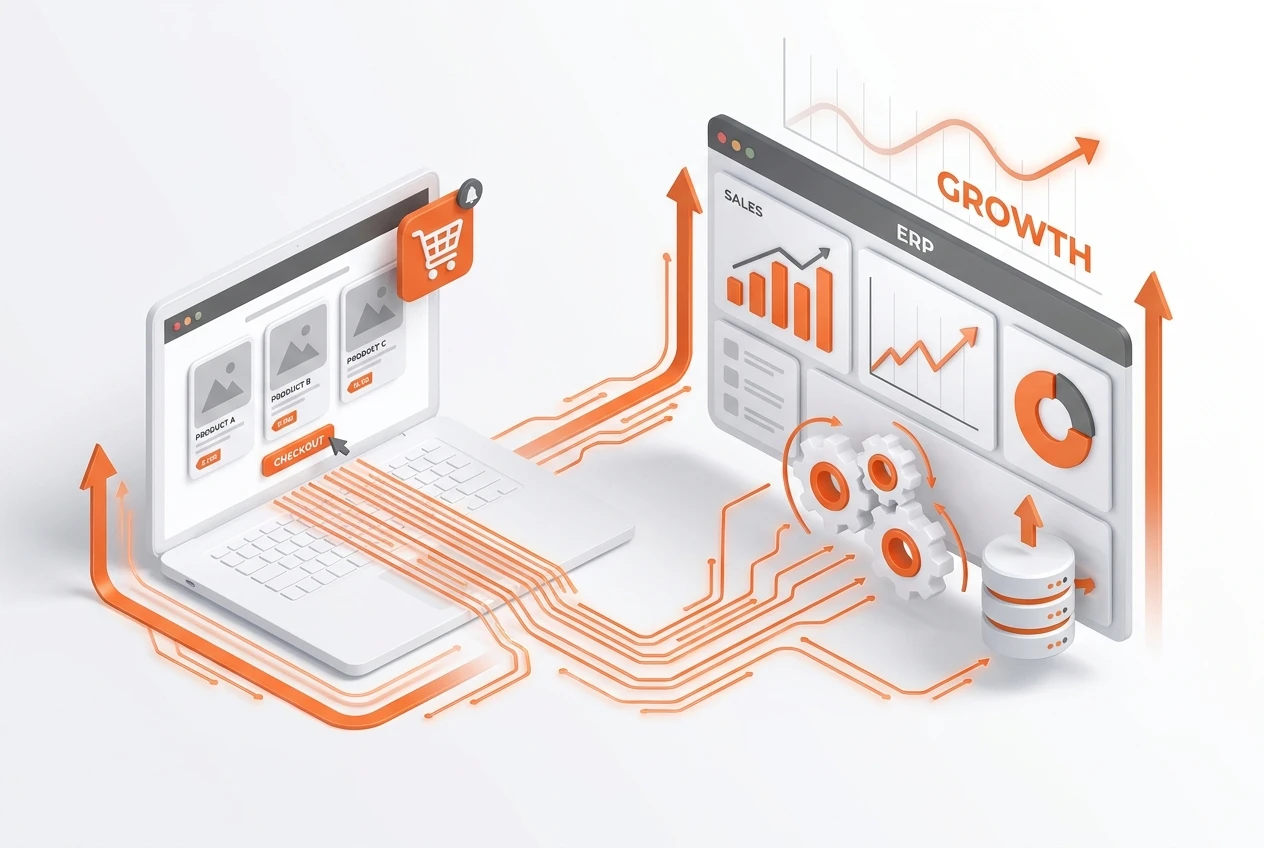
An Enterprise Resource Planning (ERP) system is a centralized software solution. As such, it integrates all core business functions into a single system. This includes accounting, inventory, sales, and human resources.
As a result, different departments can share data seamlessly. This eliminates the need for multiple, separate systems. In short, the system provides a comprehensive and real-time view of the entire company’s operations.
Why is connecting your website to an ERP system a strategic move?
Integrating your website with an ERP system is a wise decision for growth. First, it ensures that your website data is synchronized with the rest of your operations. This includes inventory, product prices, and customer data.
Furthermore, this integration reduces manual data entry. Consequently, the likelihood of costly errors decreases. This allows your team to focus on strategic tasks rather than routine work.
How does ERP system integration improve the customer experience?
ERP system integration directly impacts customer satisfaction. For example, when a customer sees real-time inventory levels, they make a confident purchasing decision. This prevents the disappointment of ordering an unavailable product.
Additionally, orders are processed faster. Orders are transferred from the website to the shipping department immediately. Consequently, customers receive their products more quickly, which strengthens their loyalty to your brand.
What are the key benefits of business process automation?
Business process automation saves time and money. Instead of repetitive manual tasks, the system performs them automatically. For example, updating order status or sending invoices to customers.
As a result, operational efficiency increases significantly. Automation also allows your team to analyze data with greater accuracy. In particular, this helps in making better decisions and identifying new opportunities for growth.
How does integrating the website with an ERP system contribute to inventory management?
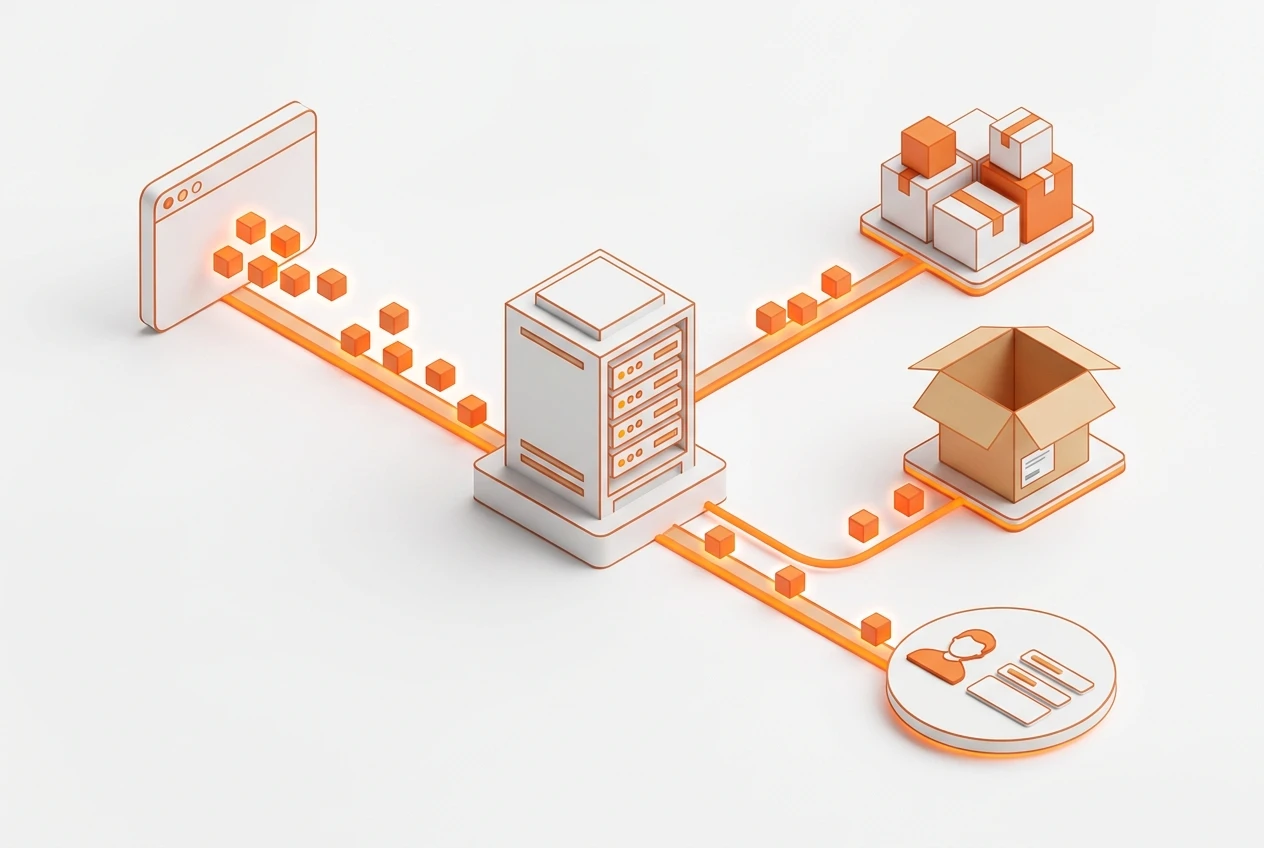
Inventory management becomes more accurate and easier. Integrating the website with the ERP system ensures real-time inventory updates across all channels. When a product is sold through the website, it is immediately deducted from the central system.
As a result, companies avoid the problem of overselling. The system also provides accurate data on best-selling products. This helps in planning future purchases and avoiding stockouts.
Does integration actually reduce human error?
Yes, integration significantly reduces errors. Manual processes rely on data entry by employees. Consequently, they are prone to typos or oversights.
In contrast, data is automatically synchronized between the website and the ERP system. This ensures the accuracy of pricing information, shipping addresses, and customer data. In short, automation reduces costs resulting from errors.
What are the common challenges when integrating a website with an ERP system?
Some challenges may arise during the integration process. First, choosing the right ERP system can be difficult. The system must align with your business goals and budget.
Furthermore, the data migration process can be complex. Therefore, it is essential to work with an experienced technology partner like Boom Media. We ensure a seamless and secure integration process for your data.
How do you choose an ERP-integrated website development company?
Choosing the right partner is crucial to the project’s success. Look for a company with proven experience in ERP system integration. They must understand both web development and business logic.
Ask to see case studies of previous projects. Additionally, ensure they provide technical support after the project launch. At Boom Media, we have the expertise to deliver integrated ERP solutions.
What are the key steps in a project to connect a website to an ERP system?
The integration process involves several structured phases to ensure success. Here are the key steps:
- Analysis and Planning: First, we define your goals and analyze your current processes.
- System Selection: Second, we help you choose the ERP system best suited to your needs.
- Development and Integration: Next, our team develops application programming interfaces (APIs) to connect the two systems.
- Data Migration: We securely migrate your existing data to the new system.
- Testing and Training: We thoroughly test the system and train your team to use it effectively.
- Launch and Support: Finally, we launch the integrated system and provide ongoing support.
How is the return on investment (ROI) from this integration measured?
Return on investment can be measured in multiple ways. Specifically, you can track reduced operating costs. This includes time saved through automation and fewer errors.
Furthermore, monitor the increase in sales and customer satisfaction. Improving the user experience leads to repeat purchases. Therefore, the integration provides tangible value that shows up in your bottom line.
Frequently Asked Questions
What is the main benefit of connecting my website to an ERP system?
The main benefit is consolidating data into a single platform. This reduces human error, improves inventory management, and speeds up order processing, thereby increasing overall operational efficiency.
How long does an ERP integration project take?
The time depends on the complexity of the project and the volume of your data. Simple projects can take a few weeks, while large projects may require several months. At Boom Media, we establish a clear timeline for every project.
Do I need an in-house technical team to manage the system?
Not necessarily. Most modern ERP systems offer user-friendly interfaces. Additionally, at Boom Media, we provide training and ongoing support to ensure your team can manage the system efficiently.
Can any website be integrated with an ERP system?
Yes, most modern website platforms (such as WordPress and Shopify) can be integrated with ERP systems. This requires the development of custom application programming interfaces (APIs), which is part of our corporate website development services.
What is the cost of integrating a website with an ERP system?
The cost varies depending on several factors, including the type of ERP system chosen, the size of your website, and the complexity of the integration required. We offer free consultations to assess your needs and provide an accurate quote.
Does integration affect my website’s speed?
When implemented correctly, integration should not negatively impact website speed. On the contrary, it can improve performance by streamlining background processes. We ensure that integration is carried out using best technical practices.
In conclusion, connecting your website to an ERP system is a strategic investment that drives your business toward sustainable growth. It streamlines your operations, enhances the customer experience, and provides accurate data for better decision-making. If you’re ready to boost your efficiency and sales, contact the Boom Media team today. We are your Meta-certified partner for delivering the best website development solutions. Follow us on Facebook to stay up to date.