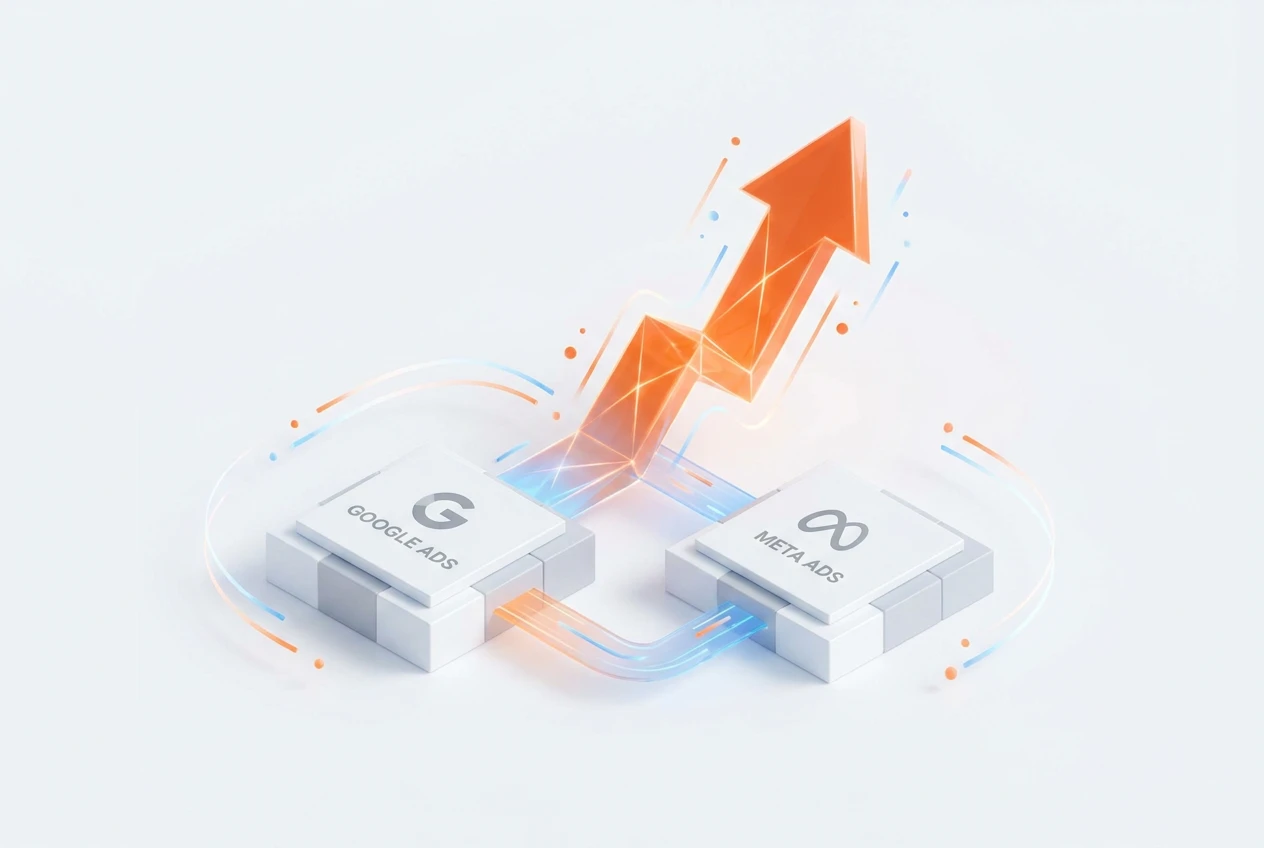
Integrating Google Ads and Meta Ads creates a seamless and effective customer journey. You can use Meta Ads to build brand awareness and target audiences based on their interests. Then, you can retarget the audience that engaged with your ads through Google Search campaigns when they’re actively searching with the clear intent to buy. As a result, this synergy increases touchpoints with the customer, builds trust in your brand, and ultimately leads to higher conversion rates and increased sales.
Why is integrating Google Ads and Meta essential today?
In the modern world of digital marketing, the customer journey has become more complex than ever. Therefore, relying on a single advertising platform is no longer enough to effectively reach your target audience. Users spend their time switching between browsing social media on Meta (Facebook and Instagram) and searching for specific information on Google. Consequently, integrating Google and Meta ads ensures you’re present at every stage of the customer journey, from initial discovery to the final purchase decision. This integrated approach prevents the loss of potential customers.
How does the customer journey begin on Meta platforms?
Meta platforms, such as Facebook and Instagram, are ideal for the awareness and discovery stage. At this stage, the customer isn’t necessarily looking for your product, but they might be interested in it if it’s presented to them. For example, you can use engaging image and video ads to showcase the benefits of your products or services. Additionally, Meta’s precise targeting tools allow you to reach specific audience segments based on their interests, behaviors, and demographics, creating valuable initial engagement.
What is the role of Google Ads in this strategy?
Google Ads come into play after building initial awareness on Meta platforms. When a user starts searching for solutions to their problems or products that meet their needs, they often turn to the Google search engine. Here lies the power of search ads: capturing these customers with high purchase intent. Furthermore, when a user sees your brand—which they’ve already recognized on Facebook—they’re more likely to click on your ad and trust your offer. This makes Google Ads a powerful conversion tool in this strategy.
Practical Steps for Implementing Integrated Advertising Campaigns
Successfully integrating Google and Meta ads requires careful planning and organized execution. First, you must have a clear understanding of your target audience at every stage. Then, you can follow specific steps to ensure you achieve the best results from your integrated advertising campaigns. Here’s a simple roadmap to get started:
- Install tracking tools: Make sure to install the Meta Pixel and Google Analytics on your website to collect accurate data on visitor behavior.
- Build awareness on Meta: Launch ad campaigns on Facebook and Instagram targeting a broad audience based on interests to introduce them to your brand.
- Create custom audiences: Use the collected data to create custom audiences of people who have interacted with your ads or visited your site.
- Retargeting on Google: Launch search ad campaigns on Google targeting these custom audiences when they search for relevant keywords.
- Analyze Results and Optimize: Continuously monitor campaign performance and analyze the data to refine your strategy and achieve the best return on investment.
How does audience retargeting work across the two platforms?
Audience retargeting is the cornerstone of this integrated strategy’s success. The process begins when a user sees your ad on Facebook or Instagram and clicks on it to visit your website. Even if they don’t make a purchase, Meta Pixel and Google Analytics record this visit. Later, when the same user searches for similar products on Google, you can show them a personalized search ad. This thoughtful reminder reinforces your brand in their mind and significantly increases the chance that they’ll complete the purchase they started earlier. This is what building successful integrated ad campaigns is all about.

What are the key metrics for measuring the success of ad integration?
To measure the effectiveness of your strategy, you must look beyond click-through rates and impressions. First, focus on the overall return on ad spend (ROAS) for both platforms. Second, analyze the customer acquisition cost (CAC) across the entire journey. Additionally, track conversion rates at every stage of the marketing funnel, from awareness to purchase. By understanding these metrics, you can identify the strengths and weaknesses of your campaigns and make informed decisions to improve your return on ad spend.
Why choose Boom Media to manage your campaigns?
At Boom Media, we don’t just manage your ads—we build a comprehensive growth strategy for you. As a Meta Business Partner, we have the expertise and tools to design and execute integrated advertising campaigns that deliver tangible results. Our bilingual team understands local and global market dynamics, ensuring your message is delivered clearly. With over 9 years of experience and more than 2,759 projects completed, we are your trusted partner for achieving your goals. You can learn more about our paid advertising services on our website.
How can paid advertising campaigns be continuously optimized?
Continuous optimization is the key to long-term success. Your campaigns must be dynamic and adaptable. Therefore, we recommend regularly conducting A/B tests on various elements such as ad headlines, images, and copy. Furthermore, continuously analyze audience data to discover new segments or refine your current targeting. Don’t be afraid to experiment with different bidding strategies or new campaign types. Remember that what works today may not work tomorrow, so monitoring and optimization are your guarantee of maintaining strong performance.
Frequently Asked Questions
What is the main difference between Google Ads and Meta Ads?
Meta (Facebook) Ads are excellent at creating demand and reaching audiences based on interests and behaviors (pull marketing). In contrast, Google Ads are excellent at capturing current demand when users are actively searching for a product or service (pull marketing).
Do I need a large budget to run both Google and Meta Ads?
Not necessarily. You can start with a small budget and gradually expand it as you see results. The most important thing is to allocate your budget wisely between the two platforms based on the goals of each stage of the customer journey.
How long does it take to see results from integrated campaigns?
Results depend on several factors, such as your industry, your budget, and the quality of your ads. Generally, initial indicators of engagement and awareness can be seen within a few weeks, while seeing a significant increase in sales and ROI may take a few months of continuous optimization.
Can I retarget my website visitors on Facebook as well?
Yes, of course. Retargeting works both ways. You can show ads on Facebook and Instagram to users who came from Google search campaigns, creating a continuous loop of engagement with your audience.
What is the most important tip for a successful Google and Facebook advertising strategy?
The most important tip is to ensure a consistent and cohesive message across both platforms. The customer should feel like they’re interacting with the same brand, whether they’re browsing Facebook or searching on Google. This builds trust and makes the purchase decision easier.
Building integrated advertising campaigns is a smart investment in the future of your business. By combining Google and Meta ads, you can create a seamless customer journey that increases awareness, builds trust, and drives higher sales. At Boom Media, we’re here to help you achieve this integration efficiently and professionally. Reach out to us today on our Facebook page or discover how our services can contribute to your business growth.